

My experience with thrice exceptionality
I was diagnosed as an adult, which meant a childhood and adolescence defined by misunderstandings and a profound disconnect from my social environment. I have changed quite a few contexts: moving from the quiet of small villages in Umbria to New York, where I could finally run at the speed that my mind demanded, to then cross the chaos of Bologna and land in the energetic Tel Aviv.
My ADHD, combined with my giftedness, led me to live cycles of radical changes where the search for experiences and new discoveries was my daily bread; in other periods, instead, autism took over. In those phases I found myself alone, locked in the house or with very few trusted people, immersed in a rigid routine of purely intellectual stimuli.
I have always felt different. Ever since I was a little girl, I lived in an invented world inside my mind, while still loving to seek out other children, even when they didn't love playing with me.
Over the years, I had to master the art of socializing. For me it wasn't instinct, it became an almost obsessive study, an algorithm to decode, until I was able to create the perfect mask for every situation and social context.
Before discovering masking, my extreme bluntness led me to clash mostly with adults: I tried to extract as many notions from them as possible, but if they made a logical error I was the first to point it out. And, as you can guess, being corrected by a tiny eight-year-old does not please many teachers.
At that age I discovered chess, which fed my hyper-focus for an entire year until I got bored. With ADHD, for me it works exactly like this: I start something, I become fiercely passionate about it, and when I reach a level of excellence thanks to autistic precision, it stops interesting me. The system has cracked the code and I move on to the next challenge.
But there is a very high price to pay to keep this two-stroke engine running. It is the paradox between excessive emotionality, the visceral need for belonging, and the head-on collision with neurotypical society and everyday family life. Social activities and being with others, despite loving them, turn into an experience so exhausting that often I just wish to walk out of the room, disappear into thin air, or make those around me disappear.
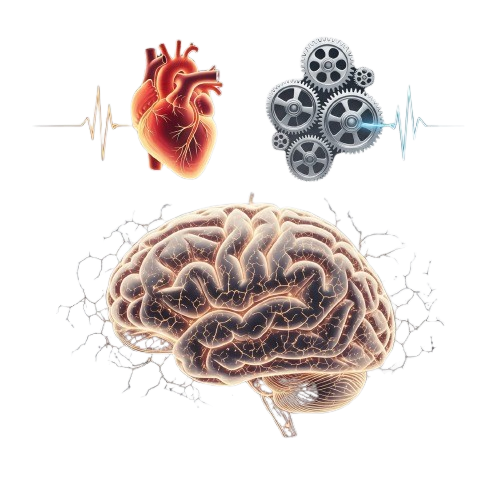
This is the true cost of extreme masking: neurodivergent burnout. The system overheats because it consumes all its energy to simulate hardware that doesn't belong to it.
This is why true connections are extremely rare. Currently, I have only one close friendship with whom I can talk for hours without filters, simply because their mental architecture is "autistic" enough to be able to understand me without demanding a mask.
Receiving the diagnosis as an adult was not a sentence, but the delivery of my source code. It allowed me to understand that chronic fatigue wasn't laziness, but the collapse of a server forced to constantly translate its own data to make itself understood by the world. It gave me permission to stop simulating normalcy.
It is exactly from this surgical realization that Project Plus is born: the desire to create a space where complexity no longer needs to be hidden or smoothed out, but can finally operate at the maximum of its explosive power.